Culling Game Rules Explained: Full Guide to Points, Players & Colonies (Simple Breakdown)
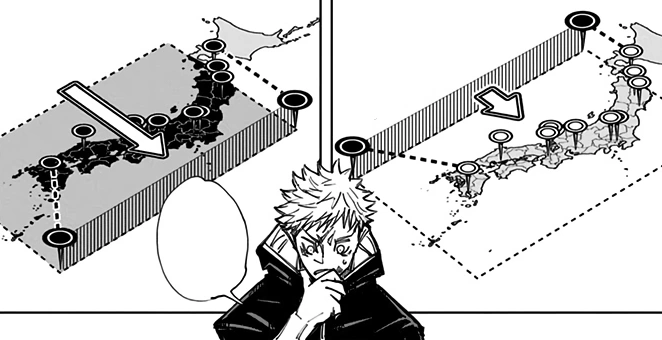
The Culling Game is one of those arcs that makes new Jujutsu Kaisen fans stare at the manga like they just got dropped into a Domain Expansion.
- Too many players.
- Too many rules
- Too many battles happening at the same time.
If you ever thought, “Wait… how does this deadly game even work?”
Don’t worry — you’re not alone. Even longtime fans needed a moment to breathe.
This guide breaks everything down in the simplest way possible.
No confusing jargon.
No lore dumps.
Just a clean, easy explanation of the rules, points, colonies, and why Season 3 depends on understanding all of this.
By the end, you’ll understand the Culling Game better than some of the players inside it.
What the Culling Game Actually Is?
Before we jump into the rules, we need to understand the game itself.
Think of the Culling Game as a twisted tournament created by Kenjaku, where survival is the only prize. Thousands of sorcerers — new, old, reincarnated, and unwilling — are thrown into sealed areas called colonies, and forced to fight.
It’s not just a battle royale.
Why the Culling Game Exists (Kenjaku’s Real Goal)
Understanding the rules is easier once you understand why the game exists at all.
The Culling Game isn’t just chaos for entertainment. It’s a ritual, and Kenjaku built every rule around one massive plan.
Kenjaku’s Goal in Simple Words
Kenjaku wants to merge all humans in Japan with Master Tengen.
That fusion can only happen if enough cursed energy is generated at once.
How do you get that much energy?
By forcing thousands of sorcerers and normal people with awakened powers to fight until only the strongest survive.
So every rule, every colony, every fight is all pushing toward one outcome:
A new world where jujutsu society collapses and Kenjaku decides what comes next.
Why Players Are Dragged Into the Game
Kenjaku implanted cursed objects into people, awakened dormant sorcerers, and revived ancient players.
Nobody joins voluntarily.
Some don’t even know why they’re fighting.
The ritual needs:
• ancient sorcerers
• modern sorcerers
• curse users
• awakened civilians
This mix creates unstable, explosive cursed energy — exactly what Kenjaku wants.
Connection to Jujutsu Kaisen Season 3
JJK Season 3 begins right after the Shibuya Incident’s fallout.
Gojo is sealed.
Tokyo is collapsing.
Curses roam freely.
The Culling Game becomes the stage where Yuji, Megumi, Yuta, Maki, Hakari, and others must evolve fast or be wiped out.
Season 3’s story only makes sense when the purpose of the game is clear:
It’s the next phase of Kenjaku’s master plan.
It’s a massive ritual designed to change the world of jujutsu forever.
All Culling Game Rules Explained Simply

The Culling Game has 8 core rules.
Some look complicated in the manga, but when you break them down, they’re actually pretty easy to understand.
Here’s each rule explained like you’re hearing it from a friend, not a textbook.
Rule 1: Once You Join, You Must Keep Playing
If a player enters the game, they must continue participating.
You can’t sit out. You can’t hide forever.
As long as you’re alive, the game considers you a “piece” on the board.
This rule instantly creates tension because every player has to get involved.
Rule 2: Killing Gives You Points
Every time you defeat someone, you earn points.
Points vary depending on the strength or value of the player, but in simple terms:
• killing = points
• no kills = no progress
Points are the currency of the Culling Game.
Rule 3: 100 Points Can Change the Rules
This is one of the most important rules.
If you reach 100 points, you earn the right to add your own rule to the game.
Yuji and Megumi chase this rule early on because it’s the only way to save people without killing everyone.
Rule 4: You Can’t Make a Rule That Breaks the Game
Even if you earn 100 points, you can’t add anything that:
• stops the game
• ends the ritual
• breaks Kenjaku’s system
You can only add rules that fit the Culling Game’s structure.
Rule 5: You Must Score Within 19 Days
If a player goes 19 days without earning any points, they get forcefully executed.
This rule pushes everyone into constant battle.
Rule 6: Entering a Colony Locks You Inside a Barrier
Once you step into a colony, the barrier closes around you.
You can’t leave until the game decides you’re allowed to.
This creates “battle zones” where dozens of sorcerers fight at the same time.
Rule 7: Participants Are Teleported Before Fighting
Before a fight begins, players are moved around inside the colony.
This prevents teams from sticking together and forces unexpected encounters.
Rule 8: Non-Players Can Be Targeted
Even civilians who got cursed energy awakened are considered players.
It’s brutal, but it raises the stakes — anyone can be dragged into the chaos.
Understanding the Culling Game Points System (Easy Breakdown)
Points decide who lives, who dies, and who gets to change the rules.
Think of them as the “scoreboard” of the Culling Game — except every point is tied to someone’s life.
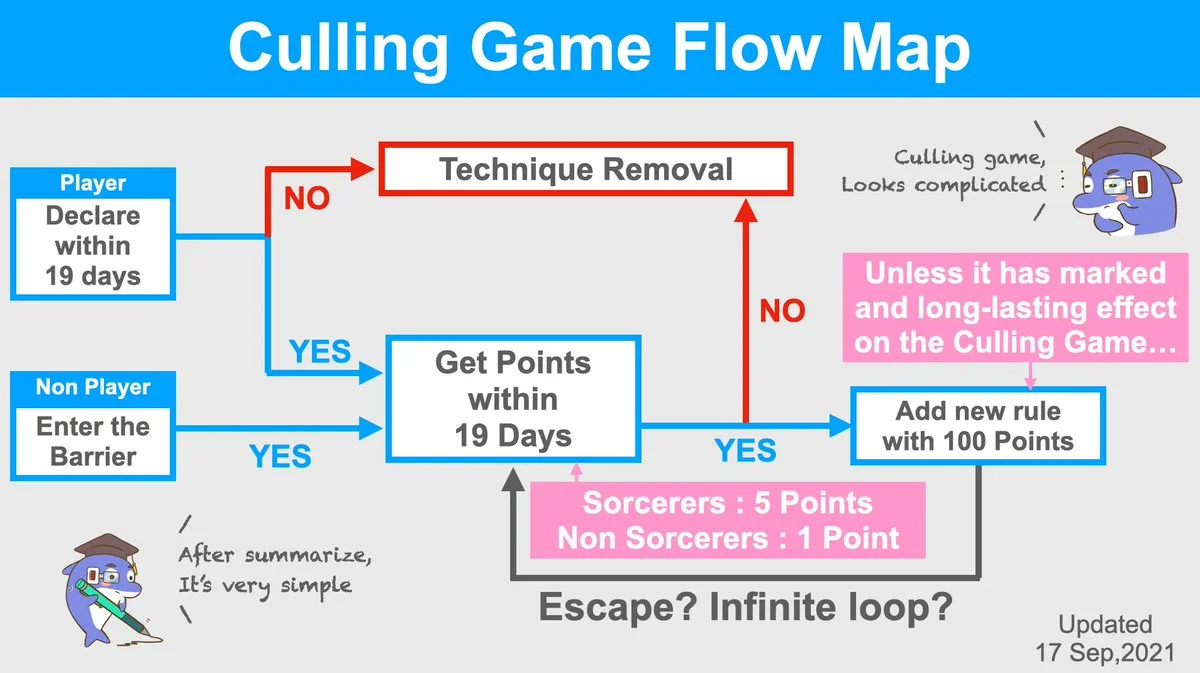
Here’s the clean, simple version.
How Points Are Earned?
Players gain points by defeating opponents inside a colony.
The basic idea is:
• Sorcerer defeated = 5 points
• Non-sorcerer defeated = 1 point
But here’s the twist:
Some players are so strong or so important that Kenjaku assigns them higher values.
That’s why fighters like Kashimo, Yuta, and Higuruma become key targets.
What 100 Points Really Mean?
100 points is the “magic number” of the Culling Game.
With 100 points, a player can:
• add 1 new rule
• negotiate rule changes that affect colonies
• help protect civilians trapped inside the game
• save allies from the 19-day execution limit
This is why Yuji, Megumi, Yuta, and Hakari rush to gain points early.
The faster they reach 100, the faster they gain control.
Why Points Decide the Flow of Season 3?
Points determine which battles get triggered.
Which colonies become active.
Which characters rise or fall.
For example:
• Higuruma becomes a target because of his ability to grant rules.
• Kashimo is hunted because of his massive point count.
• Yuta becomes essential for balancing the scoreboard.
The anime will highlight points constantly because they drive nearly every event in the Culling Game.
All Culling Game Colonies Explained Simply
The Culling Game is divided into deadly zones called colonies.
Think of each colony like its own “battle map” where different players are dropped in and forced to fight.
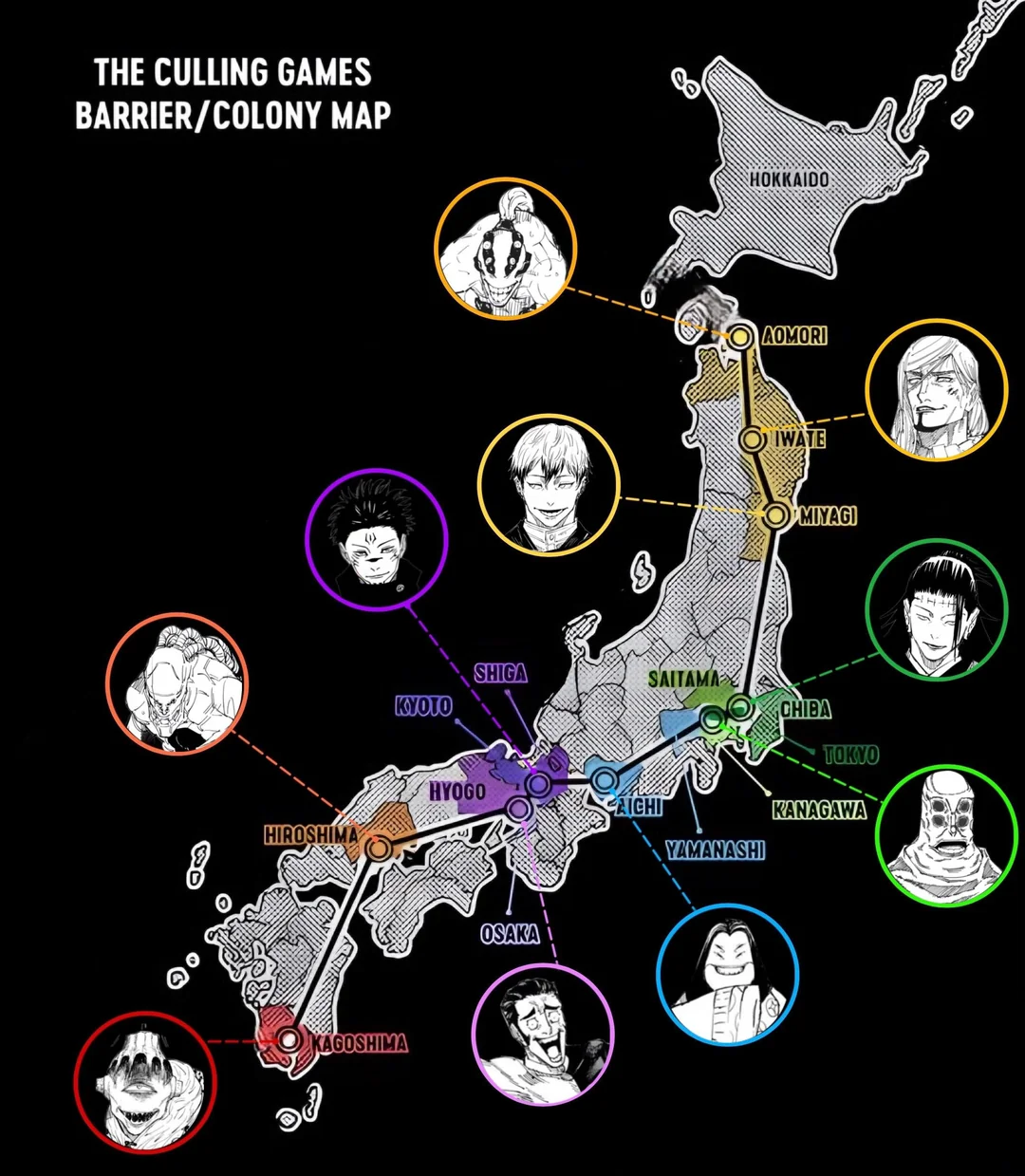
Each colony has a theme, unique fighters, and story moments that shape Season 3.
Below is the clean, simple guide to every major colony.
Tokyo No. 1 Colony
This is where Yuji Itadori and Megumi Fushiguro enter.
Key things that happen here:
• Yuji meets Higuruma, the powerful judge sorcerer
• Megumi fights Reggie and shows off new strategic growth
• The colony becomes the first major turning point of the arc
Tokyo 1 is basically the “starter map” of the Culling Game, but it hits hard emotionally and sets the pace for the entire season.
Tokyo No. 2 Colony
Yuji and Megumi don’t start here, but this colony plays a huge role later.
Characters involved:
• Rematch setups
• More awakened civilians
• Secondary conflicts that push the ritual forward
Tokyo 2 helps show how widespread the chaos really is.
Sendai Colony
If you love insane battles, this colony is the one you’ll remember forever.
Main characters:
• Yuta Okkotsu
• Takako Uro
• Ryu Ishigori
What makes it special?
It’s a pure, non-stop battle zone with multiple high-level sorcerers fighting at once.
It’s also where Yuta shines in a way we haven’t seen since JJK 0.
Expect some of the best fights of Season 3 to come from here.
Sakurajima Colony
This is the colony filled with raw brutality and emotional weight.
Main characters:
• Maki Zenin
• Noritoshi Kamo
• The deadly, reincarnated Naoya
Sakurajima focuses on Maki’s growth and sets her up as one of the strongest fighters in the entire arc.
This colony is dark, heavy, and incredibly important.
Yuji & Megumi’s Role Across Colonies
Yuji, Megumi, and their allies move between colonies through rules, points, and coordinates added by players.
Their goal is simple:
- find Gojo
- stop Kenjaku
- save civilians trapped inside the ritual
Each colony forces them to grow in different ways — mentally, emotionally, and in battle.
All Major Players in the Culling Game (Easy Character Guide)
The Culling Game pulls in fighters from every corner of Jujutsu Kaisen — new sorcerers, ancient monsters, reincarnated souls, and modern fighters trying to survive.
Here’s the cleanest, simplest guide to the most important characters you’ll see in Season 3.
Yuji Itadori
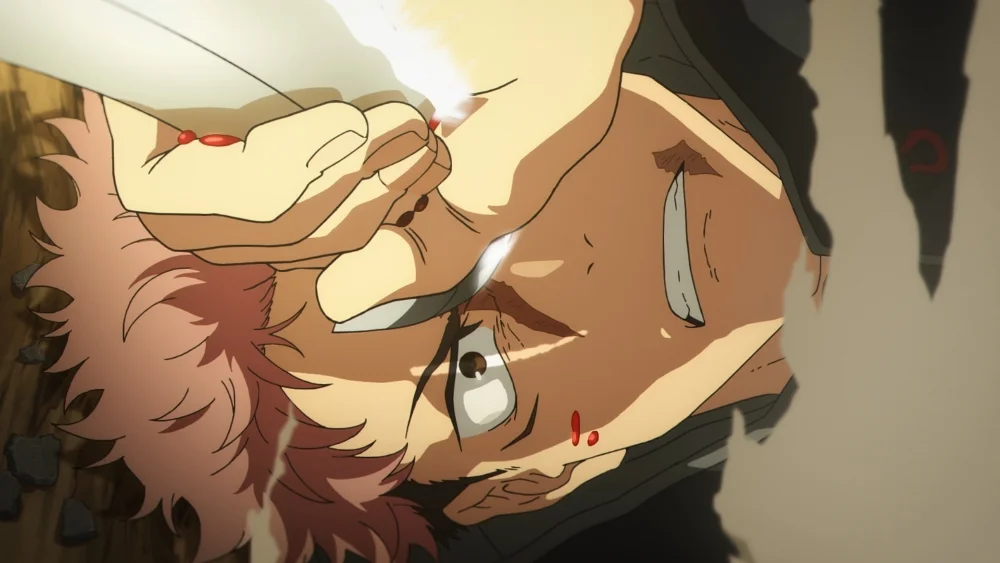
Yuji enters the Culling Game with one goal:
stop Kenjaku and protect the people trapped inside.
This arc pushes Yuji harder than ever.
He faces moral questions, impossible fights, and the growing presence of Sukuna inside him.
Yuji grows not just in battle, but in emotional strength.
Megumi Fushiguro
Megumi becomes one of the central figures in the Culling Game.
Why?
Because his role connects directly to Sukuna, Tsumiki, and the future of the entire arc.
He leads, strategizes, and finds himself forced into choices he never wanted to make.
Yuta Okkotsu
Yuta returns as one of the strongest fighters in the entire series.
Inside the Sendai Colony:
• he fights multiple top-tier sorcerers
• controls the battlefield with intelligence and raw skill
• shows why Gojo once called him special
Season 3 will make many fans fall in love with Yuta all over again.
Kinji Hakari
Hakari brings the flashiest Domain Expansion in the arc.
He’s unpredictable, loud, and insanely strong.
His big moment comes in:
• Hakari vs. Kashimo
A fight that feels like a music video mixed with a war.
Hakari becomes the wild card nobody can ignore.
Maki Zenin
The Sakurajima Colony belongs to Maki.
After losing everything, she enters the Culling Game reborn — stronger, colder, and determined to crush every obstacle.
Her biggest enemy?
Naoya, who returns in a terrifying new form.
Maki’s arc is emotional and brutal.
Higuruma Hiromi
One of the most popular new characters.
Higuruma is:
• a former lawyer
• a genius sorcerer
• the user of Judgeman, his courtroom-style curse
His fight with Yuji is one of the early highlights of the entire arc.
Ryu Ishigori & Takako Uro
Two powerhouse reincarnated sorcerers from the Sendai Colony.
• Ishigori is a beam-spamming, food-loving fighter with insane power.
• Uro bends space itself and fights with grace mixed with cruelty.
Their battles with Yuta shape the middle of the arc.
Hajime Kashimo
Kashimo is a thunder god in human form.
He enters the game for one reason:
to fight Sukuna.
His introduction sets the stage for some of the most explosive moments in the later colonies.
Kenjaku
- The mastermind.
- The puppeteer.
- The reason the Culling Game even exists.
Season 3 will show more of Kenjaku’s intelligence, cruelty, and long-term plans.
He is the final wall between the heroes and freeing Gojo.
How These Characters Shape Jujutsu Kaisen Season 3
Season 3 isn’t just about battles.
It’s about how every character pushes the story toward its breaking point.
The Culling Game is the moment where friendships, morals, and futures get tested harder than ever.
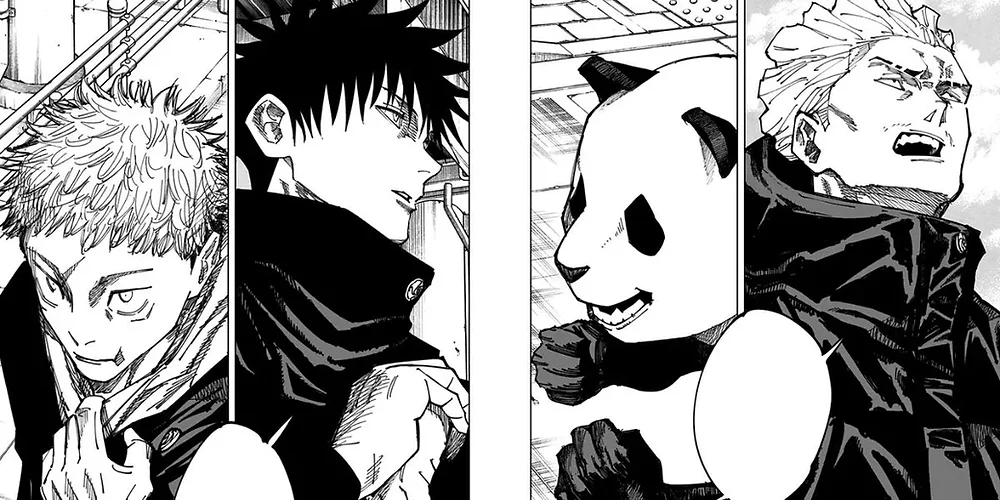
Here’s how each major player shapes the season.
Yuji’s Journey Sets the Emotional Core
Yuji carries the weight of Shibuya, Sukuna’s destruction, and the fear of losing control again.
In Season 3:
• he tries to save people without becoming a monster
• he faces Higuruma’s judgment
• he steps into fights far above his level
Yuji becomes the emotional heart of the arc.
Megumi’s Fate Controls the Entire Story
Megumi’s choices affect:
• Sukuna’s future
• Tsumiki’s safety
• the direction of the entire Culling Game
Season 3 slowly pushes him toward a moment fans will NEVER forget.
His story is the quiet storm building under every battle.
Yuta Raises the Power Ceiling
Yuta’s Sendai Colony fight proves the world hasn’t even seen his full strength yet.
His role in Season 3:
• stabilizing the colonies
• protecting civilians
• battling ancient sorcerers alone
He becomes one of the pillars of the arc’s momentum.
Hakari Adds Unpredictability and Humor
Hakari’s fights look wild, chaotic, and fun — but they matter because:
• he balances the score
• he challenges enemy strategies
• he brings raw confidence when the cast needs it most
He’s the “wild card” that changes the pace of the arc.
Maki’s Arc Brings Emotional Weight
Maki enters the Culling Game transformed — physically and mentally.
Her impact:
• exposes dark secrets inside jujutsu society
• faces Naoya in a haunting showdown
• becomes one of the most dangerous fighters alive
Her presence gives the arc a deeper emotional punch.
Higuruma Challenges Yuji’s Entire Belief System
Higuruma is more than a fight.
He forces Yuji to face guilt, justice, and responsibility.
Their encounter shapes Yuji’s mindset for the rest of the arc.
Kashimo and Sukuna Shift the Power Dynamic
Kashimo brings lightning.
Sukuna brings terror.
Both characters raise the stakes because:
• they aren’t fighting for survival
• they’re fighting for destiny
Kenjaku Drives the Entire Season Forward
Behind every colony, every rule, every tragedy — there’s Kenjaku.
His influence in Season 3:
- manipulating sorcerers
- releasing reincarnated players
- setting up the ritual
- pushing the world toward disaster
He is the reason none of the characters can rest.:
What the Culling Game Means for Jujutsu Kaisen’s Future
The Culling Game isn’t just another arc.
It’s the bridge between the world we knew… and the world Jujutsu Kaisen is about to become.
Every battle, every rule, every colony is leading the story toward a point of no return.
Here’s what the arc sets up for the future of the series.
The Fall of the Old Jujutsu System
Before the Culling Game, jujutsu society still had structure — schools, clans, rules, elders.
During the Culling Game:
- barriers break
- laws collapse
- civilians become sorcerers
- ancient fighters return
- cities turn into battlefields
This arc marks the end of the old order.
Season 3 shows the moment the jujutsu world “breaks open.”
Gojo’s Situation Becomes More Critical

The more the Culling Game escalates, the clearer it becomes:
Freeing Satoru Gojo isn’t just a goal.
It’s the only chance to stop Kenjaku.
The arc creates the path for:
- attempts to unseal Gojo
- the consequences of failure
- Sukuna’s growing influence
Season 3 builds the tension that leads directly into Gojo’s next major role.
Sukuna’s Rise Becomes Unavoidable
Sukuna watches the Culling Game like a chessboard.
Every colony, every death, every opening becomes another step toward his return to full power.
Future arcs depend heavily on:
- Sukuna’s connection to Megumi
- Kashimo’s interest in fighting him
- the ritual’s effect on his strength
The Culling Game is where Sukuna’s shadow gets bigger than ever.
New Alliances and New Enemies Form
This arc introduces characters who will matter long after the game ends:
- ancient sorcerers
- curse users
- rogue jujutsu clans
- independent players like Higuruma
These alliances reshape the power balance for the arcs that follow.
Some become allies.
Some become threats.
But all of them matter.
The Ritual’s End Changes the Entire World
Whether the heroes win or lose, the Culling Game guarantees one thing:
The world of JJK will never return to normal.
The ritual’s end sets the stage for:
• global consequences
• international jujutsu involvement
• the final conflict brewing between Sukuna, Kenjaku, and the remaining sorcerers
Future arcs carry the weight of everything that happens here.
Why Understanding the Culling Game Matters for JJK Season 3
Season 3 of Jujutsu Kaisen won’t slow down to explain every rule, every player, or every twist.
The anime will throw viewers straight into chaos — because that’s how the Culling Game feels.
But once you understand the rules and the purpose behind them, Season 3 becomes even more exciting.
Here’s why this arc matters so much.
The Arc Sets Up Every Major Character’s Future
Yuji, Megumi, Yuta, Maki, Hakari — they all hit turning points here.
Season 3 shows:
• the moment Yuji grows into a fighter who accepts his pain
• the decisions that push Megumi toward a heartbreaking fate
• Yuta’s dominance as one of the strongest sorcerers alive
• Maki’s rebirth as a true powerhouse
• Hakari’s unpredictable power changing entire battles
Their futures are shaped inside the Culling Game.
Season 3 Will Be Faster, Darker, and More Intense
Unlike the calm build-up of Season 1 or the emotional pacing of Season 2, Season 3 is:
• nonstop battles
• multiple storylines happening at once
• back-to-back high-level sorcerer fights
• huge moments that change the world
The Culling Game is like a storm breaking across Japan.
The Arc Pushes Sukuna and Kenjaku to Center Stage
This is the season where both villains start executing their true plans.
Season 3 shifts power toward:
• Sukuna’s awakening
• Kenjaku’s ritual reaching its peak
• the rise of ancient sorcerers
• the collapse of modern jujutsu society
It’s the beginning of the endgame.
Season 3’s Episode Count Depends on This Arc’s Complexity
Because the Culling Game is huge, the episode count needs to match the story’s weight.
Every colony, every character, and every fight adds a piece to the puzzle — so understanding the game helps you understand the pacing choices MAPPA will make.
Knowing the Rules Makes the Anime Easier to Follow
Once you know:
- how points work
- why colonies exist
- who the main players are
- what Kenjaku is trying to do
Season 3 stops feeling confusing and starts feeling like a giant, brilliant strategy war.
You’re not just watching sorcerers fight.
You’re watching the world shift into its final form.
Wrap-Up Thoughts
The Culling Game is the heartbeat of Jujutsu Kaisen Season 3.
It’s wild, fast, and chaotic — but once you understand the rules, it becomes one of the smartest arcs in the entire series.
- Every battle has purpose.
- Every colony changes the story.
- Every character is pushed closer to their breaking point.
Season 3 will take everything fans love about JJK, the emotion, the strategy, the power system, the unpredictable storytelling, and elevate it into something massive.
If you’re preparing for the new season, knowing how the Culling Game works will make every episode feel deeper, clearer, and way more exciting.